— IDENTITY —
Full Name
Aoki Ryūsei SPT Reizunā (蒼き流星SPTレイズナー) / Blue Comet SPT Layzner
Type
Real robot — SPT (mobile weapon type), with a hidden sentient-machine theme
Creator
Original concept: Hajime Yatate; Original story: Tsunehisa Itō and Ryosuke Takahashi; Character design: Moriyasu Taniguchi; Mechanical design: Kunio Okawara
Debut
October 3, 1985
Country of Origin
Japan
Original Medium
Anime (TV series) — an original Nippon Sunrise concept, not adapted from a prior manga
Publisher
N/A — original anime produced by Nippon Sunrise for Nippon TV
Genre
Hard science fiction real robot — interplanetary war drama
— DEVELOPMENT HISTORY —
Project Designation
Layzner — the blue SPT piloted by Eiji Asuka
Original Designer (Story)
Director Ryosuke Takahashi, alongside co-writer Tsunehisa Itō
Construction Purpose
Within the story, an advanced mobile weapon of Grados origin, brought to Mars and later Earth by Eiji Asuka to defend humanity against a coming Grados invasion
Activation Method
Conventionally piloted
Historical Significance
Regarded as a milestone closing out a chapter of Ryosuke Takahashi's career in the genre after Fang of the Sun Dougram, Armored Trooper VOTOMS, and Panzer World Galient. As a deliberate send-off, Takahashi revisited the "robot with a will and personality" concept at the root of the genre in Astro Boy — adapted, true to his realistic style, so that Layzner's sentience is initially downplayed rather than made explicit from the start
— CONTROL SYSTEM —
Primary Operator
Eiji Asuka (full name: Albatro Nal Eiji Asuka)
Control Method
Conventionally piloted
Pilot Location
Onboard cockpit
Cockpit
Not documented in further detail in available sources
Autonomy
Notably higher than typical for the genre — Layzner is written with an implicit will and personality of its own, in keeping with the show's homage to Astro Boy, though this is subtly handled rather than overt
Command Authority
Eiji Asuka, who allies himself with Earth's Cosmic Culture Club participants after revealing the coming threat from planet Grados
— PHYSICAL CHARACTERISTICS —
Robot Class
SPT (mobile weapon type), real-robot design
Body Structure
Not detailed in depth in available sources
Head Design
Not detailed in depth in available sources
Visual Characteristics
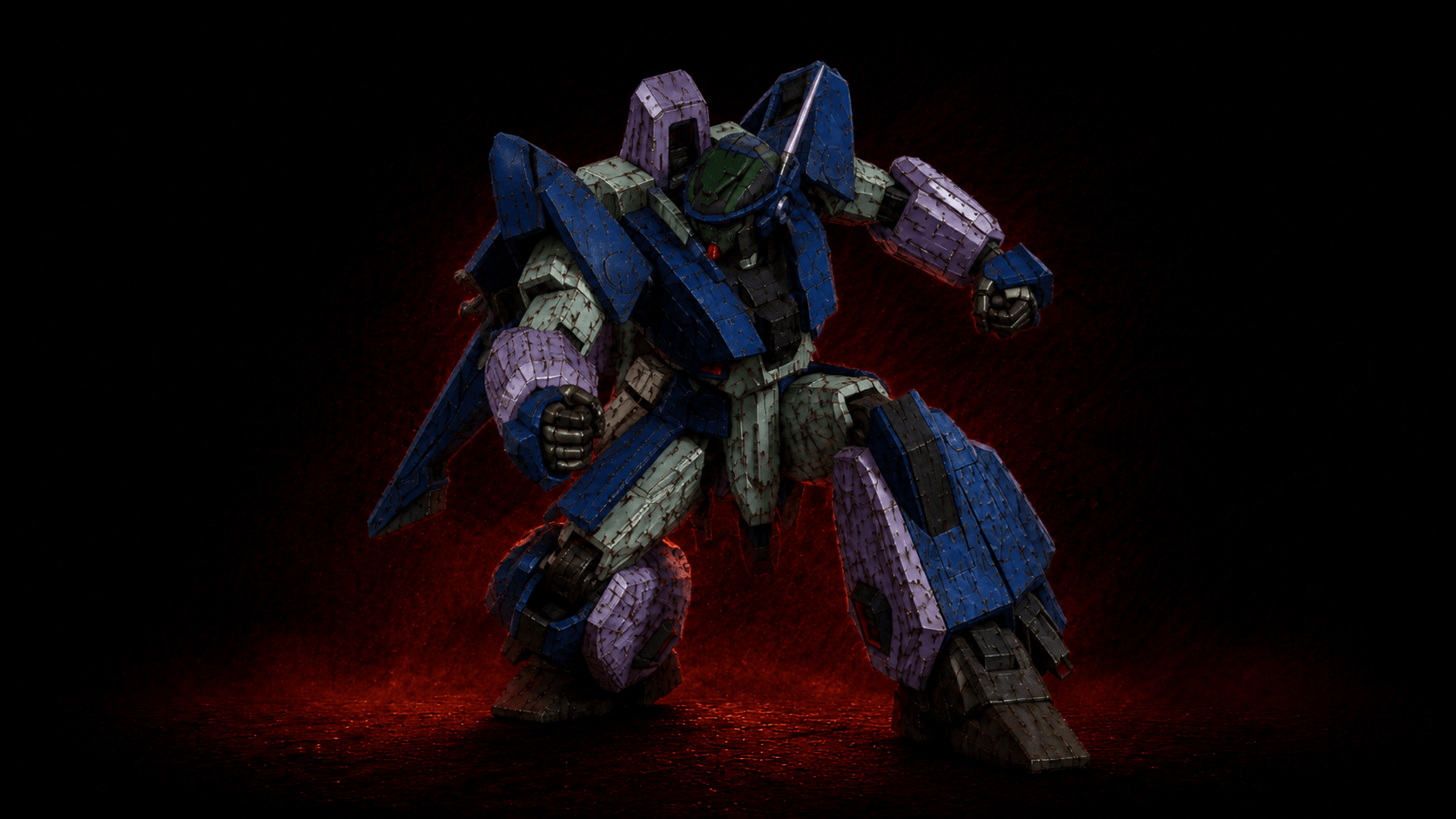
Distinguished by its blue coloration among the SPT mobile weapons introduced in the series, designed by veteran mechanical designer Kunio Okawara
— POWER SYSTEM —
Primary Energy Source
Not documented in detail in available sources
Armor Material
Not documented in detail in available sources
Manufacturing Material Origin
Built by the planet Grados, brought to the Earth-Mars conflict by Eiji Asuka
Energy Concept
Not documented in further detail in available sources
— COMBAT CHARACTERISTICS —
Primary Combat Style
Not documented in detail in available sources
Signature Weapons
Not documented in detail in available sources
Mission Profile
Defense of the Cosmic Culture Club participants on Mars, and later of Earth itself, against the invading forces of Grados
Operational Environment
Combat on Mars in the series' early episodes, later expanding to Earth as the Grados invasion intensifies
— ASSOCIATED ORGANIZATIONS —
Affiliation
Eiji Asuka and the Cosmic Culture Club (CCC) participants he comes to protect
Role
Sole defender of the CCC group on Mars, and later a key combatant against the Grados invasion of Earth
Primary Enemy
The military of Grados, a planet in the Bourdria solar system
Enemy Organization
Grados forces, which successfully invade and occupy Earth in 1996
Major Threats
Grados weapons of mass destruction — historically used once by Grados itself, and considered a stain on its own history even by its own people
— ORIGINAL ANIME / TV SERIES INFORMATION —
Title
Blue Comet SPT Layzner (蒼き流星SPTレイズナー)
Broadcast Period
October 3, 1985 – June 26, 1986
Episodes
38 (originally planned for 43)
Network
Nippon TV network
Production Company
Nippon Sunrise
Director
Ryosuke Takahashi
Runtime
Approx. 25 minutes per episode — Thursdays, 17:30–18:00
In 1996, humanity has expanded into space, but the Cold War between the United States and Soviet Union has followed it to Mars. On October 3 of that year, a group of children selected for the UN-sponsored Cosmic Culture Club (CCC) space program arrive on Mars, only to be attacked by mysterious mobile weapons known as SPTs. They are saved by a boy piloting a blue SPT, who reveals himself as Eiji Asuka, half-Earth and half-Grados, warning them that Earth itself is the true target of an invasion from the planet Grados. The show was cut short from its planned 43 episodes to 38, with its story concluded a year later in the OVA Inscription 2000.
— MAIN CHARACTERS —
Eiji Asuka
Protagonist, half-Earth and half-Grados, who arrives to warn humanity of the coming Grados invasion. Pilots the SPT Layzner.
Anna
Cosmic Culture Club participant, a kind-hearted girl who trusts Eiji from the moment they meet and grows close to him over the course of the series.
Grados
A planet in the Bourdria solar system whose military forces invade and conquer Earth in 1996, driving the series' central conflict.
— LEGACY —
Historical Position
Regarded as a fitting capstone to Ryosuke Takahashi's defining run of real robot anime through the first half of the 1980s
Genre Innovation
Deliberately reintroduced the concept of a robot possessing its own will and personality — the genre's founding idea, traced back to Astro Boy — while filtering it through Takahashi's grounded, realistic sensibility
Relationship to Previous Mecha
Follows directly in the lineage of Takahashi's Fang of the Sun Dougram, Armored Trooper VOTOMS, and Panzer World Galient
Industry Impact
Its abrupt cancellation from 43 to 38 episodes, and the fan-driven push that led to its OVA conclusion the following year, is frequently cited as evidence of the series' passionate cult following despite modest broadcast-era ratings
International Recognition
Concluded via the 1986 OVA Inscription 2000; later featured on the official Sunrise Channel YouTube alongside other classic 1980s Sunrise robot anime
— COLLECTIBLES —
Pending: no Amazon/AliExpress listings verified yet for this ficha. The collectibles grid will be added here once product links are confirmed, following the standard 3-column responsive layout.