Gaiking premiered on Fuji TV in April 1976 as the first super robot anime produced entirely by Toei Animation without a pre-existing manga as source material. Every major robot series Toei had produced before it — Mazinger Z, Getter Robo, Grendizer — had come from Go Nagai and his company Dynamic Productions. Gaiking was supposed to be different. Toei wanted to own what it made.
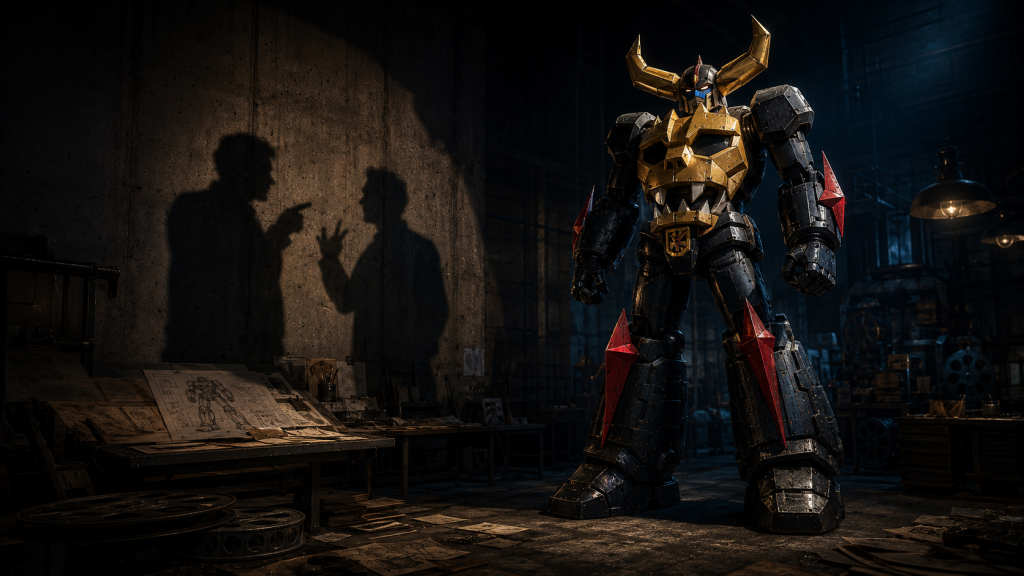
The dispute had been building for years. Go Nagai had sued Toei over the foreign rights to Mazinger Z, arguing that royalties from international sales belonged to him as the original creator. Toei disagreed. While that legal battle was ongoing, Toei moved forward with Gaiking and deliberately excluded Go Nagai from the credits. The official authorship was attributed to Kunio Nakatani, Akio Sugino, and Dan Kobayashi — members of Toei’s own staff. Dynamic Productions appeared in the opening credits of the first twenty-two episodes as a collaborator for some background monster designs, then disappeared entirely from episode twenty-three onwards.
Toei later admitted that Go Nagai had been left out of the credits specifically to avoid paying royalties. The legal battle between Dynamic Productions and Toei Animation lasted more than a decade. By the time it was over, Nagai had ceased collaborating with Toei entirely and moved his work to other studios.
In 2007, an audience member at Naples Comicon asked Go Nagai directly about Gaiking. His answer was careful. He said the question raised long-standing and complex problems with Toei Animation, and that he no longer felt the idea belonged to him — because of the choices Toei had made. It was not a claim of authorship. It was something closer to grief.
Gaiking ran for 44 episodes, introduced the mobile carrier concept that would influence dozens of later series, and became a legitimate classic of the genre. Its credits still do not include Go Nagai’s name. Go Nagai’s connection to Gaiking and Toei remains one of the most complex disputes in classic mecha history.