
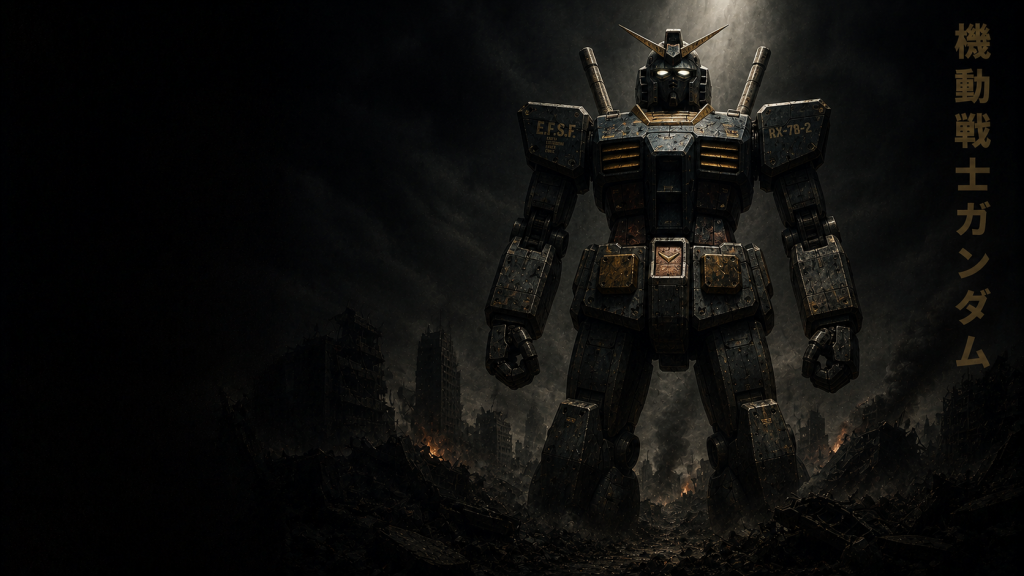
Mobile Suit Gundam is today one of the most successful media franchises in Japanese history. Its model kits — known as Gunpla — generate billions of dollars in revenue annually. Its influence on science fiction is difficult to overstate. And it almost didn’t survive its first year.
When Gundam premiered on Nagoya TV in April 1979, the reaction was silence. The show was too complex, too political, too ambiguous. Children raised on Mazinger Z and Getter Robo were used to clear heroes, clear villains, and giant robots punching monsters. Gundam gave them a war story where both sides had valid grievances and the protagonist frequently behaved badly.
The ratings were so poor that the network cut the planned 52-episode run to 39. Director Yoshiyuki Tomino negotiated a one-month extension to properly finish the story, bringing the final count to 43 episodes. The show ended in January 1980 largely unnoticed.
Then something unexpected happened.
Bandai had acquired the rights to produce model kits based on the show’s mobile suits — the mass-produced, quasi-realistic war machines that were Gundam’s central visual innovation. Unlike the toy robots of earlier super robot shows, Gundam’s mobile suits were designed with the logic of military hardware: panel lines, thruster ports, sensor arrays, realistic proportions. They were machines that looked like they could actually exist.
The model kits sold extraordinarily well. Fans who had missed the show sought it out in reruns. A theatrical compilation trilogy released in 1981 reanimated key sequences and introduced Gundam to an entirely new audience. By 1982, the franchise that had been cancelled for low ratings was the most talked-about property in Japanese animation.
The lesson of Gundam is not just about perseverance. It is about the gap between what audiences say they want and what they actually respond to when given time. Gundam failed on television in 1979 because it was ahead of what its audience was ready for. It succeeded everywhere else because it was exactly what that audience needed.